
Preached Sunday, April 12, 2026 from Hebrews 2:10-13
Theme: It was fitting that Jesus be ‘perfected’ as our Redeemer by becoming one with us through suffering.
(Unless otherwise noted, all Scripture references are taken from The Holy Bible, New King James Version; copyright 1982, Thomas Nelson, Inc.)
Read more: OUR REDEEMER—ONE WITH US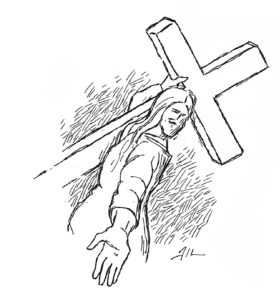
Dear brothers and sisters, the Lord Jesus—who holds total supremacy over all, who has died on the cross for you, and has been raised from the dead, and now sits at the right hand of the Father interceding for you continually—desires to be deeply involved in every aspect of your life. You can know for certain that this is true because He left His glory in heaven for you, took flesh and blood to Himself and became like you, felt all of the pressures you feel, and experienced all the trials you experience so that He can understand you perfectly. He has made Himself as close to you as He could be so that He can sanctify you unto His Father as His fully adopted child, and can share all of the splendor of His majesty and glory with you forever. And now, there isn’t a single trial that could come in your life that He isn’t all-sufficient for. There isn’t any challenge that you could have that He can’t show you how to meet. There isn’t any need in your life that He cannot supply. He has made Himself completely one with you.
And the fastest way for you to be as happy on earth as you can possibly be, and to prepare yourself for the greatest possible joy in your eternal home in heaven, is to join Him willingly in that oneness—and to extend Him a full and continual welcome into every aspect of your life with a completely open heart.
There. I thought I would begin our look at this morning’s passage by telling you how we will end. And what good news it is!
* * * * * * * * * *
We have been studying together from the Book of Hebrews, a book in the New Testament that tells us more about what Jesus has done for us than any other book. It shows us how He is the Mediator of a new covenant with God His Father, better than anything that had ever been offered before.
One of the things that the book shows us is that Jesus, in His ministry to us, is superior to the old covenant that had been offered to the Jewish people through Moses. That old covenant had been administered to Moses through the agency of angels; and the writer of Hebrews began this book by showing us how Jesus is superior to the angels. In Hebrews 2:5-9—as we saw most recently in our study—he wrote these words in reference to God our Creator:
For He has not put the world to come, of which we speak, in subjection to angels. But one testified in a certain place, saying:
“What is man that You are mindful of him,
Or the son of man that You take care of him?
You have made him a little lower than the angels;
You have crowned him with glory and honor,
And set him over the works of Your hands.
You have put all things in subjection under his feet.”For in that He put all in subjection under him, He left nothing that is not put under him. But now we do not yet see all things put under him. But we see Jesus, who was made a little lower than the angels, for the suffering of death crowned with glory and honor, that He, by the grace of God, might taste death for everyone (Hebrews 2:5-9).
Our Lord humbled Himself—not in order to become like the angels, but instead to become like us. He doesn’t redeem the angels, but instead redeems us who have been made lower than the angels but who are destined for a glory that is greater than that of the angels. He humbled Himself down to the level of partaking of our suffering in order to exalt us up to the level of His own glory.
And that brings us to our passage this morning. Verses 10-13 tell us,
For it was fitting for Him, for whom are all things and by whom are all things, in bringing many sons to glory, to make the captain of their salvation perfect through sufferings. For both He who sanctifies and those who are being sanctified are all of one, for which reason He is not ashamed to call them brethren, saying:
“I will declare Your name to My brethren;
In the midst of the assembly I will sing praise to You.”And again:
“I will put My trust in Him.”
And again:
“Here am I and the children whom God has given Me” (vv. 10-13).
These wonderful words show us how close He has made Himself to us. In fact, He has—by the grace of the heavenly Father—become so close to us that He is made one with us. As this passage shows us, it was fitting that Jesus be ‘perfected’ as our Redeemer by becoming one with us through suffering.
And because this is true, the greatest thing we can do in response is to draw as close to Jesus as we can in every aspect of our lives.
* * * * * * * * * *
Now; I like what one great preacher said about this passage. He stressed that it’s a passage that—in order to understand as we should—we need to keep in mind the things that we’re told elsewhere in the Bible about Jesus.
That would be especially true when it comes to the first great point that this passage teaches us; and that is that …
1. IT WAS FITTING THAT THE CAPTAIN OF OUR SALVATION BE MADE PERFECT THROUGH SUFFERING (v. 10).
In verse 10, we’re told that Jesus—the captain of our salvation—needed to be made ‘perfect through suffering’. But we shouldn’t misunderstand those words to be telling us that Jesus was somehow ‘imperfect’ when He walked on this earth. The Bible makes it clear that He eternally existed in heavenly glory as completely pleasing to God His Father. We’re told that, when He walked on this earth, He was tempted in all ways that we could be tempted, yet never once sinned. We’re told that He kept the Father’s will and obeyed Him perfectly throughout His earthly life. He didn’t need to be made perfect because He had been somehow imperfect.
So, what does it mean that Jesus needed to be made ‘perfect through suffering’? The best way to understand this is to say that, in order for Jesus to be our Savior completely, He needed to experience something that He never could have otherwise experienced until He was born into this world as one of us. He needed to experience suffering. He walked in this world as one of us—fully human, and therefore subject to all the frailties and difficulties and temptations that we experience in this world. But He still retained full deity as the Son of God, and was therefore able not to sin. This has made Him ‘complete’ or ‘effective’ or ‘fully qualified’ to be united to us as our sinless, suffering Savior.
Just think of it, dear brothers and sisters! That’s how close He was willing to come to us. He was even willing to suffer like us in order to be one with us and to be the Savior we needed Him to be to us! If He loves us that much, then how could it be that He would ever withhold anything else from us that we truly need?—no matter how great it may be?
So with that in mind, let’s consider this first portion of this passage. Let me read it to you in a way that identifies ‘who is who’ in this verse. Verses 10-11 say, “For it was fitting for Him [that is, God the Father], for whom are all things and by whom are all things, in bringing many sons to glory [that is, us], to make the captain of their salvation [that is, Jesus] perfect through sufferings. For both He who sanctifies [that is, Jesus] and those who are being sanctified [that is, us] are all of one …”
Now, let’s unpack these words just a bit. First, notice that they’re telling us something about God the Father. They’re telling us that God the Father was He ‘for whom are all things and by whom are all things’. This stresses to us the greatness of the authority of God the Father as the Creator and Sustainer of all things.
It’s true, of course, that those same things were also said of the Lord Jesus as God’s eternal Son. It tells us in Colossians 1:16-17 that by Jesus
all things were created that are in heaven and that are on earth, visible and invisible, whether thrones or dominions or principalities or powers. All things were created through Him and for Him. And He is before all things, and in Him all things consist (Colossians 1:16-17);
and this emphasizes to us that our Lord Jesus shares full deity with the heavenly Father. God the Father created all things; and it was through the agency of His Son that He did so. That reminds us that the Father and the Son are one. But in the context of our passage this morning, the divine Person ‘for whom are all things and by whom are all things’ is clearly meant to be understood as the Father Himself. As the Creator and Sustainer of all that is, He holds absolute authority and exercises absolute wisdom. He alone is qualified to declare what is fitting and necessary for our salvation.
A second thing to notice in this passage is that it tells us something about God’s intention for us. It tells us that it was His desire to bring ‘many sons to glory’. This is speaking of our salvation in the most intimate of terms. God the Father didn’t just look upon us in our helpless condition, have pity on us pathetic sinners, and then leave us as pathetic sinners in separation from Him. Rather, it was His gracious will to save us so as to make us His own sons and daughters by adoption, to give us all the rights that come from being a genuine son or daughter of His, and to bring us into full glory with His own Son Jesus. As it tells us in John 1:12-13,
as many as received Him [that is, Jesus], to them He gave the right to become children of God, to those who believe in His name: who were born, not of blood, nor of the will of the flesh, nor of the will of man, but of God (John 1:12-13).
Let’s always appreciate Jesus as our Savior. But let’s also always remember that our salvation by Jesus is ultimately the gracious plan of God the Father. It was He who crafted the plan to make us into His own adopted sons and daughters and to bring us into glory through the sacrifice of His Son Jesus.
A third thing to notice is that this passage tells us something about God’s Son Jesus, through whom our salvation was brought about. The Father is referred to in this passage as ‘the captain’ or ‘the author’ of our salvation. The word that is translated ‘captain’ in the version of the Bible I’m using is one that means ‘prime leader’ or ‘chief leader’. It’s also translated ‘author’ in the New American Standard version; and it’s the same word that is used in Hebrews 12:1-2,
… let us run with endurance the race that is set before us, looking unto Jesus, the author and finisher of our faith … (Hebrews 12:1-2);
where we’re told that He is not only the one who completes our salvation for us, but He is also the one who goes before us in it. He is—you might say—the great trailblazing pioneer of our salvation.
And that leads us to yet another thing to notice; and that is that as the divine and sovereign Creator and Sustainer of all things, in bringing us as ‘many sons and daughters’ to glory before Himself, God the Father saw it ‘fitting’ or ‘proper’ or ‘right’ that His own Son—this great captain of our salvation—this great pioneer who Himself cleared the trail and made the way for us—be perfected in this role by means of ‘suffering’. It was the will of God the Father that, in order to be our perfect Savior, His Son must experience the suffering that we experience—even to the point of suffering a humiliating death on the cruel cross.
What an important word that is—that it was ‘fitting’! It reminds us that there was no other way. Do you remember what it was that Jesus prayed as He experienced agony in the Garden of Gethsemane as He awaited His betrayal and arrest and ultimate execution on the cross? He prayed,
“O My Father, if it is possible, let this cup pass from Me; nevertheless, not as I will, but as You will” (Matthew 26:39).
A little later He prayed again and said,
“O My Father, if this cup cannot pass away from Me unless I drink it, Your will be done” (v. 42).
If there had been any other way for you and I to be brought to glory as God’s adopted sons and daughters than the cross—any other way than for the Son of God to bear the guilt of our sins on the cross, and to have the Father turn away from Him, and for Him to have to cry out, “My God, My God, why have You forsaken Me?”—then surely the Father would have used that other way. But there was no other way for our sins to be paid for completely than by the sacrifice of His own Son. And so, He saw it ‘fitting’. He saw it as proper, and necessary, and right.
Who can question Him ‘for whom are all things and by whom are all things’ in this matter? And what else can we say to it all but, “O, what love He has for us!”
* * * * * * * * * *
So this is the first thing to notice from this passage: that God the Father deemed it fitting—in bringing us as many sons and daughters to Himself in glory—that His Son Jesus, as the captain of our salvation, be made perfect through suffering.
And this leads us to the next thing to notice; and that is that …
2. HE THUS SANCTIFIES US BY BECOMING ONE WITH US.
Do you remember that great prayer that the Lord Jesus prayed in John 17? It was the prayer that He prayed just before going to the cross for us. It was a prayer that only He could pray for us as the captain of our salvation. And in it, He said to the Father,
“And for their sakes I sanctify Myself, that they also may be sanctified by the truth” (John 17:19).
In submitting Himself to the suffering that the Father deemed it ‘fitting’ that He undergo for us, He ‘sanctified’ Himself—that is, He set Himself apart as devoted to His Father’s purpose; and all so that we also may become ‘sanctified’—that is, set apart unto God and made holy unto Him—by Jesus’ union with us. Jesus did this by becoming so united to us that He experienced the suffering we experience—and even tasted death for us—so that we could be brought by Him to the Father as ‘many sons to glory’. As it says in the first half of verse 11, “For both He who sanctifies and those who are being sanctified are all of one …”
Now; in what ways did Jesus become one with us and us with Him? In the rest of this passage, the writer of Hebrews tells us some of those ways. The first way that we see is through what is implied in the words “all of one”; that is, He became one with us in humanness.
When our Lord came to be the captain of our salvation, He didn’t come as a being who was different from us. He didn’t come in a way that was somehow alien to our nature; because if He did, He wouldn’t have been able to be the captain of salvation to fallen human beings like us. Instead, we’re told in the Scripture that He willingly set aside His rights and privileges as the Son of God, was conceived in His humanity in the womb of Mary by the Holy Spirit, and was born among us as a full-fledged member of the human race. As it says of Him in Hebrews 2:14-18,
Inasmuch then as the children have partaken of flesh and blood, He Himself likewise shared in the same, that through death He might destroy him who had the power of death, that is, the devil, and release those who through fear of death were all their lifetime subject to bondage. For indeed He does not give aid to angels, but He does give aid to the seed of Abraham. Therefore, in all things He had to be made like His brethren, that He might be a merciful and faithful High Priest in things pertaining to God, to make propitiation for the sins of the people. For in that He Himself has suffered, being tempted, He is able to aid those who are tempted (Hebrews 2:14-18).
Both He who sanctifies (that is, Jesus our captain) and we who are sanctified by Him are all one to the fullest possible degree. He took full humanity to Himself in order to be fully united to us. Can you think of anything more the Son of God could have done than that to become one with us?
But there was more! It wasn’t just in order to partake of our humanness. He also became one with us by entering into the closest relationship of love with us that He could. He became one with us in brotherhood. As it says in verses 11, “For both He who sanctifies and those who are being sanctified are all of one, for which reason He is not ashamed to call them brethren …”
Do you remember what the Lord Jesus said to Mary of Magdala after He rose from the tomb? He told her –
“Do not cling to Me, for I have not yet ascended to My Father; but go to My brethren and say to them, ‘I am ascending to My Father and your Father, and to My God and your God’” (John 20:17).
Because of what He did on the cross for them, He could now call them His ‘brethren’. He could say that His Father was now their Father, and that His God was now their God. His suffering for us has made Him one with us in the close relationship of brotherhood.
Now, I wonder if you might have family members who embarrass you a little. It might be that you have a relative that you’re sometimes just a little hesitant to admit is a part of your ‘family’. Don’t think about it too much, though; because the chances are that someone else in your family might also feel that way about you! We’ve all felt that kind of embarrassment at one time or another. And if you or I might feel that way toward someone else, can you just imagine how much of a right the Lord Jesus would have to be ashamed of us? And yet, we’re told that He isn’t ashamed at all to call us ‘brethren’. In fact, that’s a figure of speech for saying that He is actually overjoyed to recognize us as His brethren. That’s how much He has been made one with us. He’s delighted to call us brethren!
As we read on, we see that He became one with us in community. He loves His church, and completely identifies Himself with His people gathered together. In verse 12, the writer of Hebrews quotes the Lord; “saying: ‘I will declare Your name to My brethren; In the midst of the assembly I will sing praise to You.”
Do you know which passage that was taken from? That’s a quote from Psalm 22:22. In that psalm, we’re given a vivid picture of the crucifixion of our Lord Jesus 1,000 years before it happened. It was written by King David, and it begins with the very words that our Lord would later quote from the cross: “My God, My God, why have you forsaken Me?” It goes on to describe how the Lord would be mocked and taunted as He hung on the cross—how they would divide His clothing, and pierce His hands and feet. But it also described the victory of His deliverance through resurrection. And as a result of dying on the cross for us, He would then go on to say that an assembly of His redeemed ones would be formed within which He Himself will utter praise to His Father:
I will declare Your name to My brethren;
In the midst of the assembly I will praise You (Psalm 22:22).
Dear brothers and sisters, one of the ways that our Lord has made Himself one with us is by being one with His church—the gathered assembly of us whom He has redeemed. He delights to be in our midst. And by the way; if He delights in identifying Himself with His church and makes Himself one with it, then who would we be to not also love being in the church that He loves?
The first half of verse 13 goes on to tell us that He is one with us in dependency. The writer quotes the Lord as saying, “And again: ‘I will put My trust in Him.’” In other words, the Lord puts His trust in His Father—just as we must also do.
Here, the writer was quoting from Psalm 18. It’s a psalm that King David wrote near the end of his long career as king. He looked back on his life and recounted all of the times that God had been his protector and deliverer through many trials. There were times when he was almost certain that his life would be taken from him and that he would end up in the grave. But he declared in Psalm 18:2,
The Lord is my rock and my fortress and my deliverer;
My God, my strength, in whom I will trust;
My shield and the horn of my salvation, my stronghold (Psalm 18:2).
And the trust that King David wrote of spoke prophetically of the trust that the Lord Jesus would place in the Father as He faced the cross for us. He knew that God would deliver Him from death; and as He approached the cross, He trusted His Father … just like you and I must trust the Father. Think of it! If there could be anyone that we would have thought wouldn’t need to trust in the Father, it would be our mighty Lord. And yet, He made Himself one with us in our need to trust in God. He trusted God in times of trial, too—just as we must do.
And finally, we see at the end of verse 13 that He became one with us in hope. The writer quotes the Lord again from the Old Testament as saying, “And again: ‘Here am I and the children whom God has given Me.’”
This is a quote from the Old Testament Book of Isaiah. The prophet Isaiah wrote it at a time when the people of Israel were surrounded by hostile nations that threatened their very existence. But to show that God was nevertheless going to protect Israel and give her a future, He allowed Isaiah to have children who would serve as prophetic signs to the Jewish people. The times were dark; but God had a future for His people … and they needed to wait patiently for Him. In Isaiah 8:16-18, the prophet Isaiah wrote,
Bind up the testimony,
Seal the law among my disciples.
And I will wait on the Lord,
Who hides His face from the house of Jacob;
And I will hope in Him.
Here am I and the children whom the Lord has given me!
We are for signs and wonders in Israel
From the Lord of hosts,
Who dwells in Mount Zion (Isaiah 8:16-18).
Isaiah had hope along with his children. And this spoke prophetically of our Lord. He, too, experienced what it meant to wait on His Father’s timing and have a sense of hope in His promises—just as we must do. We must experience ‘hope’; and He became one with us in that experience.
* * * * * * * * * *
So; as this passage shows us, it was fitting that Jesus be ‘perfected’ as our Redeemer by becoming one with us. He became one with us in every way possible—except in sin. And even then, He became united to us so that He could pay the debt of our sin for us on the cross.
And what do we do with this wonderful truth? Hebrews 4:14-16 tells us this:
Seeing then that we have a great High Priest who has passed through the heavens, Jesus the Son of God, let us hold fast our confession. For we do not have a High Priest who cannot sympathize with our weaknesses, but was in all points tempted as we are, yet without sin. Let us therefore come boldly to the throne of grace, that we may obtain mercy and find grace to help in time of need (Hebrews 4:14-16).
And so; I affirm once again what I said at the beginning of our time this morning. The Lord Jesus—who holds total supremacy over all, who has died on the cross for you, and has been raised from the dead, and now sits at the right hand of the Father interceding for you continually—desires to be deeply involved in every aspect of your life. You can know for certain that this is true because He left His glory in heaven for you, took flesh and blood to Himself and became like you, felt all of the pressures you feel, and experienced all the trials you experience so that He can understand you perfectly. He has made Himself as close to you as He could be so that He can sanctify you unto His Father as His fully adopted child, and can share all of the splendor of His majesty and glory with you forever. And now, there isn’t a single trial that could come in your life that He isn’t all-sufficient for. There isn’t any challenge that you could have that He can’t show you how to meet. There isn’t any need in your life that He cannot supply. He has made Himself completely one with you.
And the fastest way for you to be as happy on earth as you can possibly be, and to prepare yourself for the greatest possible joy in your eternal home in heaven, is to join Him willingly in that oneness—and to extend Him a full and continual welcome into every aspect of your life with a completely open heart.


His & Hers
Lorem ipsum dolor sit amet, consectetur adipiscing elit. Nulla convallis egestas rhoncus. Donec facilisis fermentum sem, ac viverra ante luctus vel. Donec vel mauris quam.…
Jesus - Changes Everything
Lorem ipsum dolor sit amet, consectetur adipiscing elit. Nulla convallis egestas rhoncus. Donec facilisis fermentum sem, ac viverra ante luctus vel. Donec vel mauris quam.…
Pneuma - Life in the spirit
Lorem ipsum dolor sit amet, consectetur adipiscing elit. Nulla convallis egestas rhoncus. Donec facilisis fermentum sem, ac viverra ante luctus vel. Donec vel mauris quam.…
Soul Detox
Lorem ipsum dolor sit amet, consectetur adipiscing elit. Nulla convallis egestas rhoncus. Donec facilisis fermentum sem, ac viverra ante luctus vel. Donec vel mauris quam.…