
Bethany Bible Church Sunday Sermon Message
September 21, 2025
2 Timothy 2:1-2
Theme: One of the key ways that the gospel of Jesus Christ is to be kept and protected is by making sure we pass this grace on to others with integrity.
(All Scripture is taken from The New King James Version, unless otherwise indicated).
Click HERE for the audio version of this sermon.
Click HERE for the live stream version of this sermon.
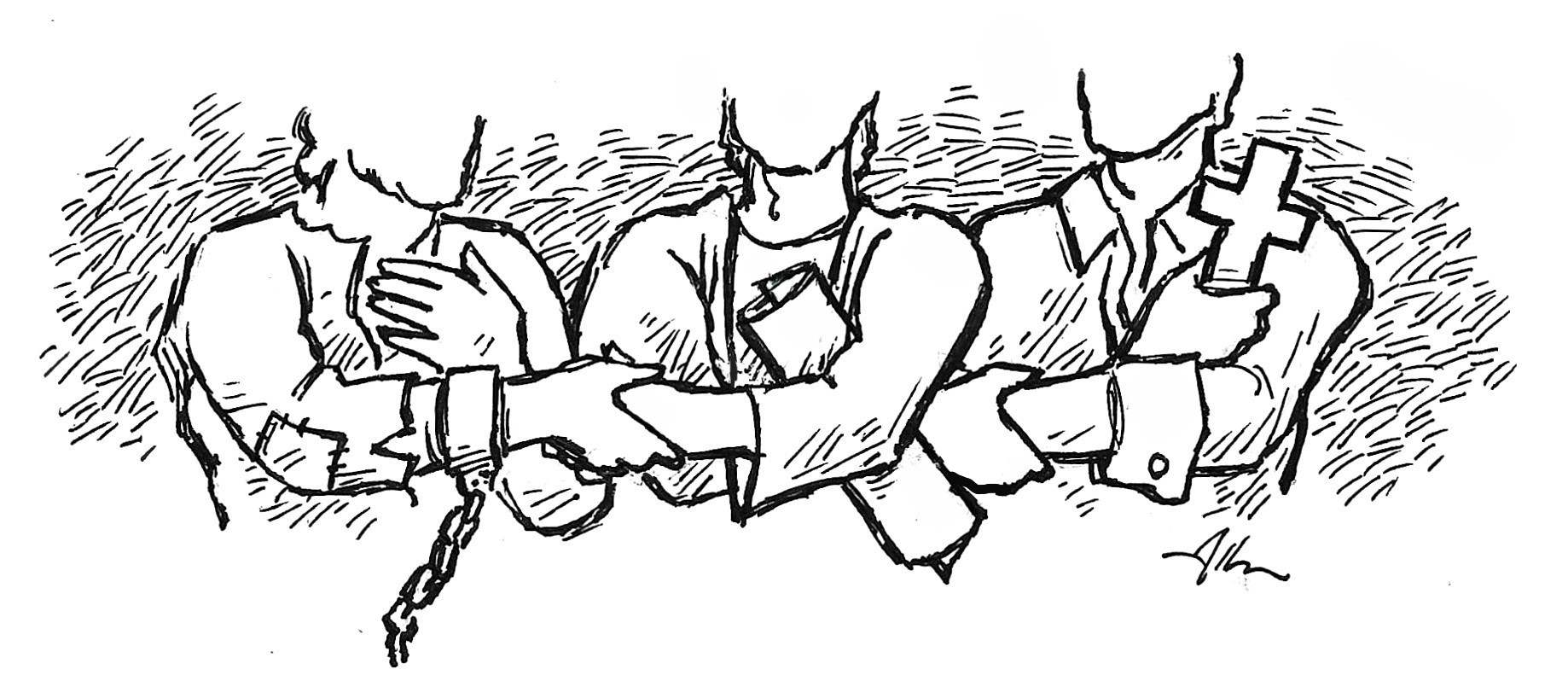
I have learned something important about the way that my faith in Jesus Christ has grown over the years. The thing that had most solidified my faith—especially early on—was my relationships with other strong believers who had built into it.
Many other things have contributed to my understanding and growth in that faith—things such as the churches I had attended, the education I had received, the books I had read, the daily habits I embraced, and even the trials and tests I underwent. But when I think about where I am in my Christian life today, I’d have to say it has been because of the stronger, more mature believers who took an interest in me at an early age, pulled me aside, and built into my faith personally. They met with me and prayed with me during times of trial. They explained the Bible to me and helped me understand how to read it and gain benefit from it. They guided me in my understanding of biblical doctrine and corrected me when I was in error. They modeled the Christian life to me and established the path for me.
My first love, of course, is for the Lord Jesus Himself; and my first priority is to grow in a deeper relationship with Him. But I honestly can’t think of the relationship with Jesus that I have by faith today without also thinking of the key people that He brought into my life along the way—pastors, teachers, professors, and godly mentors. They were used by Him to teach me and guide me and help me grow with integrity in the faith. I’m deeply grateful for them; and I feel certain that if it hadn’t been for them, I would have easily gone astray. I can almost hear their voices—even today—urging me along as I read my Bible and make significant life choices as I follow Jesus.
We aren’t meant to grow in the Christian faith as a solo act. We need other believers—who are a little ways ahead of us in the faith—in order to grow in Christ as we should. And of course, that causes me to turn my attention to myself and ask: Am I being that kind of an influence on someone else? Am I making sure that I’m walking with true commitment and integrity to the message of the gospel of Jesus Christ—just as it was once for all time given to the saints—and am I helping someone else to walk in it with the same commitment and integrity? Am I fulfilling my duty to other fellow believers, just as that duty was fulfilled to me?
I have thought much about this as we come to this morning’s passage. It’s found in 2 Timothy 2:1-2. In it, the apostle Paul was writing to his younger brother in the faith—Pastor Timothy; and he told him,
You therefore, my son, be strong in the grace that is in Christ Jesus. And the things that you have heard from me among many witnesses, commit these to faithful men who will be able to teach others also (2 Timothy 2:1-2).
* * * * * * * * * *
Now, as these two verses show us, God has chosen that the truth of His gospel message is to be protected and passed on through relationships—relationships in which the gospel is clearly established in the lives of others, and in which others are taught to walk with Jesus as they should. And that’s not an idea that is new. Take a look for a moment at Psalm 78. There, the psalmist wrote;
Give ear, O my people, to my law;
Incline your ears to the words of my mouth.
I will open my mouth in a parable;
I will utter dark sayings of old,
Which we have heard and known,
And our fathers have told us.
We will not hide them from their children,
Telling to the generation to come the praises of the Lord,
And His strength and His wonderful works that He has done.For He established a testimony in Jacob,
And appointed a law in Israel,
Which He commanded our fathers,
That they should make them known to their children;
That the generation to come might know them,
The children who would be born,
That they may arise and declare them to their children,
That they may set their hope in God,
And not forget the works of God,
But keep His commandments;
And may not be like their fathers,
A stubborn and rebellious generation,
A generation that did not set its heart aright,
And whose spirit was not faithful to God (Psalm 78:1-8).
Obviously, this psalm is talking about Jewish fathers passing on the truths of the Scriptures to their children. It was a part of how the truths of God’s word were kept, preserved, and prevented from being lost or ignored as the generations rolled along. But the principle you can see in these words is that one of the key ways that the truths of the faith are to be protected and kept—one of the most vital ways that one generation is to pass the message of the gospel of Jesus on from one generation to another—is through the mentoring that comes through godly, nurturing, loving relationships.
It’s a bit like a baton that one runner hands off to another in a race. The baton doesn’t change; but it must be faithfully kept, and faithfully passed, and faithfully gripped by whoever it is passed on to—so that they can faithfully keep it and pass it on to the next runner. In the same way, the unchanging, life-transforming message of who Jesus is and what He has done for us—the message of the gospel that is articulated for us in the Bible—must be faithfully kept in its integrity, and then passed on accurately to the next generation; and all so that they can, in turn, protect it and pass it on as it was originally given.
This was something that was very important to the apostle Paul—especially in the context of the letter he wrote to Pastor Timothy. He had reminded Timothy of how others had passed instruction in the faith in Christ on to him. He reminded Timothy in 1:5—near the very beginning of the letter—that he had first been taught it by his grandmother Lois and his mother Eunice. They had already nurtured Timothy in the Christian faith long before Paul had entered into his life. And Paul himself had also instructed him in that faith—both by word of mouth and by living example. He told him in 3:10-15;
But you have carefully followed my doctrine, manner of life, purpose, faith, longsuffering, love, perseverance, persecutions, afflictions, which happened to me at Antioch, at Iconium, at Lystra—what persecutions I endured. And out of them all the Lord delivered me. Yes, and all who desire to live godly in Christ Jesus will suffer persecution. But evil men and impostors will grow worse and worse, deceiving and being deceived. But you must continue in the things which you have learned and been assured of, knowing from whom you have learned them, and that from childhood you have known the Holy Scriptures, which are able to make you wise for salvation through faith which is in Christ Jesus (3:10-15).
At the time that Paul wrote those words, he was sitting in a Roman prison cell—awaiting his own execution for having faithfully preached the message of the gospel. He himself had been persecuted for the faith; and many evil men and impostors were indeed growing worse. But this made it all the more crucial that Timothy kept true to that faith—and that he not let that faith become altered or changed or ignored. As he told Timothy in 1:14-15;
Hold fast the pattern of sound words which you have heard from me, in faith and love which are in Christ Jesus. That good thing which was committed to you, keep by the Holy Spirit who dwells in us (1:13-14).
As our passage this morning shows us, then, one of the key ways that the gospel of Jesus Christ is to be kept and protected is by making sure we pass this grace on to others with integrity.
And please remember, dear brothers and sisters in Christ; the instruction from this passage isn’t just for pastors. It’s for all of us in the body of Christ—all of us who have been saved by faith in the gospel of Jesus and have been entrusted with its message for the world. We, too—each one of us—must make sure that we are passing that grace on to others that God has placed in our lives with integrity.
* * * * * * * * * *
Now; let’s look at 2 Timothy 2:1-2 a little more closely. First, notice that, in order to pass this grace on to others in the way that we should …
1. WE MUST BE IN GRACE OURSELVES.
In verse 1, the apostle Paul told Timothy, “You therefore, my son, be strong in the grace that is in Christ Jesus.” That’s the first essential requirement. You and I cannot pass on to others—with full integrity—what we don’t have ourselves. So, right at the very beginning, Paul urged Timothy to make certain that he was living in a deep, personal relationship of love with Jesus Christ and was growing in the grace of God in a personal way. You and I must do the same.
Look at how Paul began these words to Timothy. He told him, “You therefore, my son …” The word “therefore” is meant to draw Timothy’s attention back to what Paul had just said to him. He had let Timothy know that many—who had at one time worked faithfully with Paul—had later turned away from him. They had seen how he was suffering in prison for the message of the gospel, and they didn’t want to suffer along with him; so they pulled away. The word “therefore” is meant to draw Timothy’s attention to that. And the word “you” is meant to draw attention to the personal responsibility Timothy had in the light of that sad fact—that is, that he himself was to be diligent to remain faithful to the gospel, and to pass the message on with full integrity and courage.
And do you notice that he said, “my son”? Don’t pass by those words too quickly. They not only emphasize Paul’s deep love for his younger brother Timothy, but also draw attention to the fact that—at one point along the way—Paul had been the one who had led Timothy to a personal faith in Jesus. He had explained the gospel to Timothy and prayed with Timothy to place his trust in Jesus as his personal Savior and Lord. Paul was—in that sense—Timothy’s spiritual ‘father’ in the faith; and Timothy was his spiritual ‘son’. That’s why Paul could say that he knew—for certain—that the faith that was in his grandmother Lois and in his mother Eunice was now also in him. He was a sincere believer in Jesus and was a truly redeemed man.
And all of this teaches us an absolutely crucial lesson about passing the grace of the Lord Jesus on to others: We must make certain that we are in that grace ourselves as sincere recipients of it. We can’t effectively encourage someone else to grow in a relationship with Jesus if we ourselves don’t have one. We can’t instruct others in the pure message of the gospel of Christ that we ourselves haven’t wholeheartedly believed and trusted and been saved by. We can’t hand off a baton in the race of faith that we ourselves don’t have in our own hands. We can’t pass on to someone else what we don’t possess ourselves.
This is a good time to ask the question: When it comes to the people around you that you might influence—fellow church members, friends, neighbors, children, grandchildren—are you sure of your own relationship with Jesus by faith? Can you say with confident certainty that you have placed your trust in Him—and in Him alone—as the atoning sacrifice for your sins? Are you today in a personal, loving, saving relationship with Him by faith? It’s not wrong to ask that question. In fact, it’s essential that we ask it. In another letter—in 2 Corinthians 13:5—the apostle Paul wrote;
Examine yourselves as to whether you are in the faith. Test yourselves. Do you not know yourselves, that Jesus Christ is in you?—unless indeed you are disqualified (2 Corinthians 13:5).
So; before you or I seek to pass this grace on to others with full integrity, we would do well to make absolutely certain that we have the personal integrity of being in that grace ourselves!
And next, notice what else Paul told Timothy in this verse. He said, “You therefore, my son, be strong in the grace that is in Christ Jesus.” Paul wanted Timothy to make sure that he was passing the grace of Jesus Christ on to others, not only as a sincere recipient of God’s grace through faith, but also as someone who was ongoingly growing in it.
The word that Paul used in this verse—translated by the two words “be strong”—is a verb that’s particular form describes an ongoing habitual act. It’s meant to convey the idea of not only having been strengthened in the grace that is in Christ Jesus, but of continually being strengthened in it. And that’s what Paul meant to say to Timothy; that is, that he was to be strong in the grace that is in Christ Jesus as an ongoing habit of life—to be continually growing in that grace.
In order for us to pass on the grace of the Lord Jesus to others, we need to be in it ourselves as an active, increasing, ever-expanding reality in our lives. And so, another good question to ask is: Are you continually growing in your relationship with Jesus? It may be that you have—at one time—made a clear decision to place your trust in Him as your Savior; but it’s not enough to ‘have been saved’. Are you continually experiencing the reality of your salvation in everyday life? Are you turning to the Lord Jesus increasingly to help you in your troubles and challenges? Are you praying to the Father in His name regularly? Are you feeding from His word daily? Are you turning away from sin more and more? The way that the apostle Paul put this is in Philippians 2:12-13;
… work out your own salvation with fear and trembling; for it is God who works in you both to will and to do for His good pleasure (Philippians 2:12-13).
Before we can effectively pass the realities of the faith on to others—and show others how Jesus is sufficient for all their needs—we must be making sure that we are experiencing those spiritual realities daily in our own lives. So; let’s make sure that we ourselves are ongoingly growing in the faith.
And finally, notice one more thing. Paul told Timothy, “You therefore, my son, be strong in the grace that is in Christ Jesus.” The phrase “in Christ Jesus” is vital. It’s reminding us that this wonderful thing called “grace”—which means the free gift of God’s favor, and His free supply of all that we need for life and for eternity—is found nowhere else than in a relationship with a wonderful Person named Jesus. We can only effectively pass this grace on to others if we ourselves are living as dependent on Christ through it.
Jesus’ own way of putting this is that we’re to be ‘abiding’ in Him—just like the branch is to remain vitally attached to the vine. He said;
“Abide in Me, and I in you. As the branch cannot bear fruit of itself, unless it abides in the vine, neither can you, unless you abide in Me. I am the vine, you are the branches. He who abides in Me, and I in him, bears much fruit; for without Me you can do nothing” (John 15:4-5).
To ‘abide’ in Christ is to have a deep, continual relationship with Him—one in which our roots go down deep in Him, and in which we draw daily strength from him. So; this is also a very good time to also ask: Are you making sure that you’re walking through life with a deep love for, and a deep dependence upon, the Lord Jesus Himself? Are you spending time with Him in prayer, and leaning on Him in all your challenges, and living in increasing obedience to Him? Are you abiding in Him? We can’t do anything without Him. And so, you and I really can’t pass on the grace of the gospel of Jesus to others unless we’re truly living in dependence upon Him ourselves.
* * * * * * * * * *
So then; that’s what the first verse of this passage teaches us. In order to pass the grace of the gospel on to others as we should, we need to make sure we’re living in it ourselves. That’s why Paul urged Timothy to make sure he was growing in that grace himself.
And with that in mind, let’s notice how the second verse then goes on to teach us that …
2. WE MUST BE PASSING THAT GRACE ON TO OTHERS.
Paul went on to tell Timothy in verse two, “And the things that you have heard from me among many witnesses, commit these to faithful men who will be able to teach others also.” The word “and” connects verse two to verse one; and shows us that living a life of integrity to the gospel ourselves will naturally lead us to passing the gospel on with integrity to others who need to hear it and grow by it. This is teaching us something that we very much need to remember today: that one of the ways we make sure to protect the precious gospel of Jesus is by making sure we’re passing it on as we should.
Notice how Paul explains this to us. First, we must do so as accurate stewards of it. ‘Stewardship’ implies a sense of responsibility with something precious that has been entrusted to us. It means that we handle it carefully; and that we don’t alter it, or modify it, or mishandle it. And that’s what Paul urged Timothy to be—a good, faithful, accurate steward of the message of the gospel. He described the grace of the gospel as “the things that you have heard from me among many witnesses …”
The gospel message that Paul passed on to Timothy—that thing that he was to pass on to others—was not something that Paul himself had invented. It has divine authority. It was given to him by revelation from the Lord Jesus. But it hadn’t been given to Paul only. It had also been given by the Lord Himself to His apostles—who lived with Him, and watched Him, and heard His teaching for three-and-a-half years. It’s interesting to remember that, when Paul first began to preach at the command of the Lord, he went to Jerusalem and communicated the message of the gospel to the apostles and leaders of the church,
lest by any means I might run, or had run, in vain (Galatians 2:2).
What’s more, many others that Paul had preached to along the way—and whose lives he had impacted with the message of the gospel—could also confirm these things to Timothy. So, there would have been no question in Timothy’s mind about the accuracy and integrity of the message of the gospel that had been handed on to him.
By the way; just think of what an advantage you and I have today over Timothy! We have in our hands this morning something that Timothy didn’t have; and that is the full revelation of the gospel of Jesus Christ as it has been written down in Scripture, gathered together into one Book. We not only have all of Paul’s letters, but also the Gospels themselves, written by eyewitnesses who were with Jesus; and we also have the letters of many of the other apostles. Plus, we have two thousand years of history of the Christian faith—with all of the testimonies of the countless saints who have lived for Jesus in the light of the gospel that Paul preached and the other apostles taught. We truly have the things that Paul passed on to Timothy confirmed to us “among many witnesses”.
We, then, have no excuse for being anything other than careful and accurate stewards of this precious gospel as it has been given to us—passing it on without changing it, or modifying it, or drifting from it in any way; but preserving it and protecting it and proclaiming it faithfully.
And then, secondly, we must be passing this faith on to others as faithful instructors of it. As Paul wrote to Timothy, “And the things that you have heard from me among many witnesses, commit these to faithful men …”
The Greek word that Paul used—that is, to “commit” these things to faithful men—is the same word that Paul used to describe what he had done to Timothy. In 1:14, he told Timothy,
That good thing which was committed to you, keep by the Holy Spirit who dwells in us (1:14).
It meant to place something precious into the safekeeping of someone else. And now, in the same way that the gospel had been committed to Timothy’s safekeeping and stewardship, Timothy was now to commit that same gospel to “faithful men”. This would have required that Timothy spend time with them, invest in them, and teach them accurately the truths of the faith. He was to be ‘a link in the chain’ that went from Paul to him to them; and to pass the gospel on to them with full integrity—just as someone has been ‘a link in the chain’ that passed that gospel message on to us; and just as we are now to be to someone else.
And finally, we must do this as expectant investors in it. I think that’s the best way to put it. We must be looking carefully at the call to pass this message on to others who will also live devotedly in this grace, and so cherish it and protect it that they themselves will then pass it on to others with integrity. When we invest in the lives of others for Christ, we’re truly investing in the spread of the message of the gospel. As Paul told Timothy, “And the things that you have heard from me among many witnesses, commit these to faithful men who will be able to teach others also.”
That’s how this precious gospel has been spread throughout the centuries in such a way as to come to you and me. And that’s how we now—in our time—must ensure that it is faithfully passed on to the generation to come.
* * * * * * * * * *
Now; thinking back to the faithful Christian teachers and mentors that I had in my life, one mentor in particular stands out. He was one of my professors in Bible college, who also became one of my dearest friends.
One of the things that I learned from him was what he often called ‘the self-perpetuation clause’ of the Great Commission. You know the Great Commission of our Lord, don’t you? It’s found in Matthew 28:18-20; and in it, the Lord Jesus told His disciples:
“All authority has been given to Me in heaven and on earth. Go therefore and make disciples of all the nations, baptizing them in the name of the Father and of the Son and of the Holy Spirit, teaching them to observe all things that I have commanded you; and lo, I am with you always, even to the end of the age” (Matthew 28:18-20).
Do you notice how Jesus commanded us to go out and make disciples—“teaching them to observe all things” that He commanded? One of those things that Jesus commanded—which we are to then teach others to observe—is the command to ‘go out therefore and make disciples’. It’s a commandment that keeps repeating itself over and over and over with each successive generation.
May God help us then to keep that commandment. May He enable us to make sure we pass this precious gospel on—with integrity—through the relationships that God gives us in our time. That’s how it will be kept protected, preserved, and proclaimed for generations to come.
AE