
Bethany Bible Church Sunday Sermon Message
August 24, 2025
2 Timothy 1:13-14
Theme: We must faithfully protect the gospel of Jesus, as it was given, through the power that God Himself provides.
(All Scripture is taken from The New King James Version, unless otherwise indicated).
Click HERE for the audio version of this sermon.
Click HERE for the video archive of this sermon.
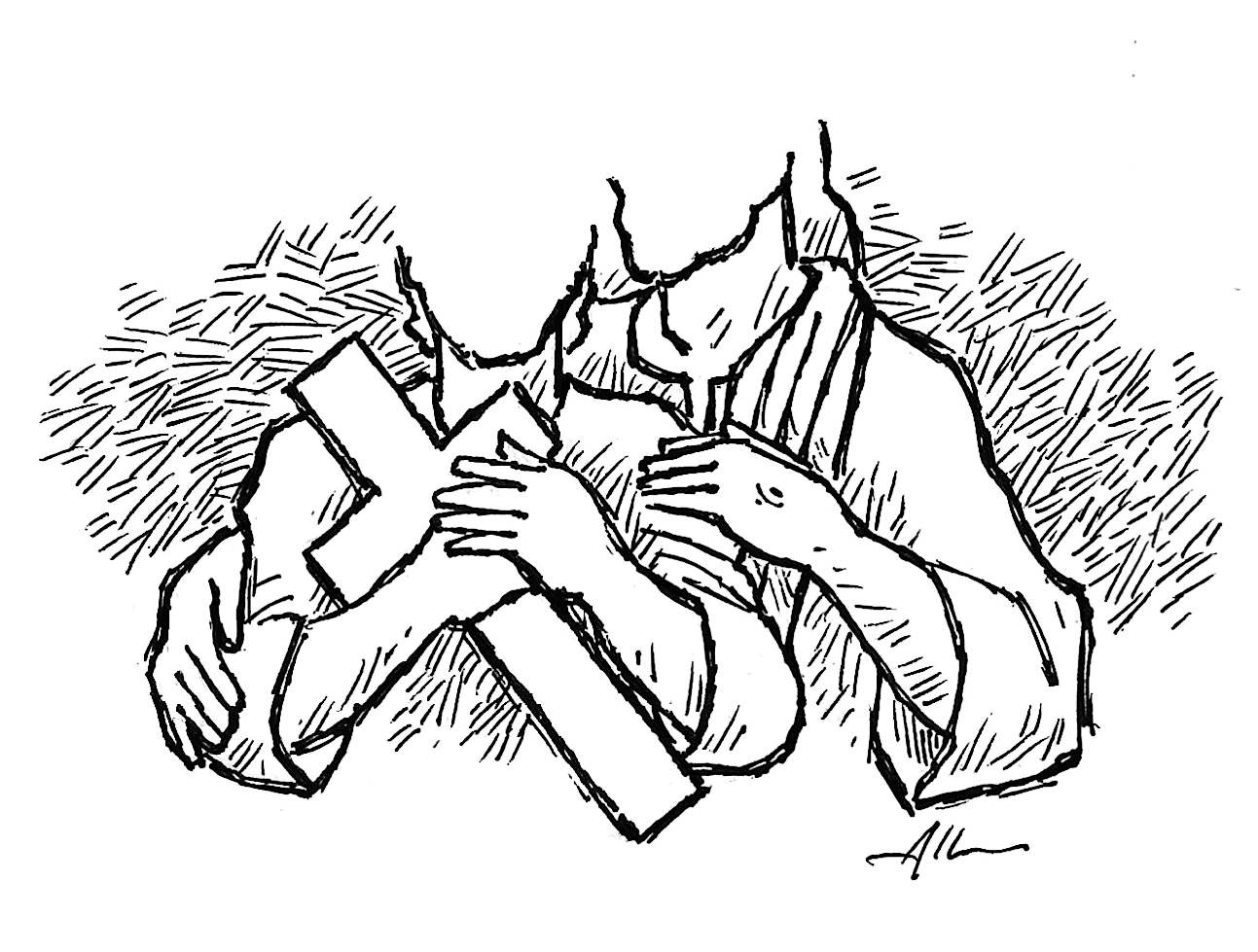
Dear brothers and sisters in Christ, just think of what a great privilege we have. We have been given the greatest message the world has ever heard, and have been commissioned by the Son of God with the task of protecting it and proclaiming it to the world. Ours is the most relevant and needed task in all of human history … and we should never forget it.
Just think of it. The Lord Jesus Christ, the Son of God in human flesh—after He had been crucified as the atonement for our sins, and after He had been raised again in victory as proof of our justification—and just before He ascended to the Father in glory with the promise to return—stood before His gathered followers and said;
“All authority has been given to Me in heaven and on earth. Go therefore and make disciples of all the nations, baptizing them in the name of the Father and of the Son and of the Holy Spirit, teaching them to observe all things that I have commanded you; and lo, I am with you always, even to the end of the age” (Matthew 28:18-20).
He has given us—as His called-out people—the task of telling the world who He is, what He taught, what He has done for us, and what all people now must do to believe and be saved eternally by Him. He sends some of us to faraway lands that have never heard these things before. He keeps others of us where we are to declare these things to those around us. But wherever He places us, we should never get used to the fact that we have been given the greatest and most relevant task there is. We should never become complacent or indifferent about it, or cease valuing the tremendous thing that has been entrusted to us. The gospel of Jesus Christ—the good news of what He has done to save us and reconcile us to the heavenly Father—is the one and only message in this world that saves souls for eternity. Everything else seems to fade into irrelevance in comparison to it. And we who have been given the task of proclaiming it ought to protect it and proclaim it with all our energies.
That was something that the apostle Paul believed with all his heart. It was something that he was willing to lay down his life to do. And when he wrote his final letter to his younger ministry partner, Pastor Timothy, it was a sense of priority that he wanted very much to pass on to him also. In 2 Timothy 1:13-14—as he was sitting in a prison cell—knowing that his life was about to end—he told Timothy:
Hold fast the pattern of sound words which you have heard from me, in faith and love which are in Christ Jesus. That good thing which was committed to you, keep by the Holy Spirit who dwells in us (2 Timothy 1:13-14).
He wanted Timothy to feel the greatness of that privilege. He wanted him to value the precious message of the gospel so that he would give his all to faithfully protect it and proclaim it—just as it had been passed on to him. He wanted Timothy to be sure to take the things that he had learned from Paul about this gospel, and to faithfully pass them on to other trustworthy stewards who would come after him—so that they too would protect it, and proclaim it, and pass it on just as it had been entrusted to them, all the way to the day when the Lord Jesus would return.
And that means that what Paul had to say to Timothy in these two verses applies also to you and me. We, too—in this church family and in these times—must keep true to that message as it has been given to us in God’s word. We, too, must faithfully keep it and protect it. And we, too, must always do so with reliance on the power and help that is given to us by God.
* * * * * * * * * *
Now; it’s very hard to think of a time in which it would be more important to remember this than the times in which we’re living—a time when so many who should be good stewards of this gospel are wandering from it and are seeking to change it into something more acceptable to this world. A great Bible teacher named Dr. Warren Winters reflected on these two verses and wrote;
Throughout the centuries God’s work has been done by men and women who stood steadfast in their hours of trial. It would have been convenient for them to have compromised, but they stood firm. Paul was such a man, and he encouraged Timothy to follow his example …
… Throughout human history, Satan has opposed God’s word. “Yea, hath God said?” was Satan’s first word to mankind (Gen. 3:1), and he continues to ask that question. Throughout the history of the church, the Word of God has been attacked, often by people within the church; yet it still stands today. Why? Because dedicated men and women have (like Paul and Timothy) guarded the deposit and faithfully handed it to a new generation of Christians …1
I would only add this—and I’m sure Dr. Wiersbe would agree: Those faithful men and women of the past not only guarded the deposit and faithfully handed it to the next generation, but they also did so with a whole-hearted reliance on the power and help of God in doing so.
These words from Paul, then, aren’t meant for Timothy alone. And even though they were certainly intended for pastors, they aren’t for pastors alone either. They are for all of us, dear brothers and sisters in Christ; because all of us are to keep true to the great commission that our Lord gave us. So; this morning, let’s take the words of 2 Timothy 1:13-14 to heart. As they show us, we must faithfully protect the gospel of Jesus, as it was given, through the power that God Himself provides.
It’s our great privilege—and our great duty—to do so.
* * * * * * * * * *
Now; if you’ll look carefully at these two verses, you’ll discover that they both basically make the same strong appeal to Timothy; but in two different ways. Read them in distinction from one another, and you’ll see that this is so.
Verse 13 says, “Hold fast the pattern of sound words which you have heard from me, in faith and love which are in Christ Jesus.” And there, you see that Paul told Timothy what it was that he had passed on to him, what it was that Timothy was to do with it, and what the resource was that he was to rely on in doing so. And as we look at verse 14, we find the same three things. It says, “That good thing which was committed to you, keep by the Holy Spirit who dwells in us.” And there again, we see the thing that had been entrusted to Timothy, what it was that he was to do with it, and what power he was to rely on in doing so.
And so; this morning, that’s how I suggest that we look at these two important verses. Let’s consider first what it is that both of these verses tell us has been entrusted to us; then what it is that we’re to do with it; and finally, how it is that we are to do so. And then, at the end of each of these considerations, let’s take a moment to think about the implications of what they would mean for us today.
First, consider …
1. WHAT HAS BEEN ENTRUSTED TO US.
Look first at verse 13. Paul told Timothy, “Hold fast the pattern of sound words which you have heard from me …” So; the thing that had been entrusted to Timothy was the pattern of doctrinally sound words—that is, the good, healthy, theologically truthful, authoritative pattern of the doctrine of the gospel—that he had heard and learned from Paul.
Paul, as you know, didn’t create the gospel he preached from out of his own head. He made this very clear in Galatians 1:11-12; when he wrote,
But I make known to you, brethren, that the gospel which was preached by me is not according to man. For I neither received it from man, nor was I taught it, but it came through the revelation of Jesus Christ (Galatians 1:11-12).
He had formerly been a hostile opponent to the gospel, and had been a violent persecutor of the church. But the resurrected Lord Jesus met him one day, and converted him, and made him into the greatest preacher of the gospel that there ever was. Paul had received this gospel firsthand—directly from the Lord Jesus Himself! And he went on in his amazing life to preach and to write all about it. He wrote 13 letters that we have in the Bible (possibly 14, if you count the Epistle to the Hebrews); and in them—under the superintending inspiration of the Holy Spirit—he explained that gospel in accurate detail. He was led to write it all down so that it wouldn’t be lost or distorted over time; and God has graciously preserved it all for us—in accurate and trustworthy form—even to this very day.
And think then of what a great privilege Timothy had! He had been personally led to faith in Jesus by the apostle Paul, and was taught and trained in the doctrine of the gospel by him. Paul was his teacher, mentor, and example in all of these things. And that’s what Paul had passed on to Timothy—the ‘pattern of sound words’ of the doctrine of the gospel which he had ‘heard’ from him.
You know; that word ‘pattern’ is particularly interesting to me as an artist and illustrator. It describes a pattern to be traced upon. When I create a drawing or painting of some kind, I start with a faint pencil rendering. It gives me the basic outline of what the image should be. Then, I might lay another piece of paper over it in order to make the finished tracing, or I might draw or paint directly upon it. But that initial pencil drawing serves as the pattern for me to follow. And that’s what Paul had given Timothy. He had laid out to him the basic outline—the pattern—of the doctrine of the gospel that he had received from the Lord. Timothy was not to depart from that pattern of teaching. This didn’t mean, of course, that he had to repeat everything Paul said word for word; but rather, it allowed the things that Paul had given him to serve as the guide in his own preaching and teaching of the gospel. He was not to distort or misrepresent the doctrinal pattern that had been laid out for him; because to do so would end up confusing the message and robbing people of a chance to hear, and believe, and be saved.
And then, look at what he said in verse 14. He wrote, “That good thing which was committed to you, keep …” That “good thing” was—of course—the doctrinal truth he heard from Paul about the gospel. It was the very gospel message itself. It was called that “good thing”—or as it can be translated, that “worthy” or “honorable” thing—because it’s the only message from God, given in this world, by which men and women can be saved and have eternal life. The good news of the gospel of Jesus Christ is, quite literally, the best and most valuable “good thing” there is in all of human history.
In the original language, Paul called it the good “deposit” or the good “entrustment”. The word that Paul used referred to a thing that is committed into the hands of someone for their safekeeping—just like we would put a deposit in a bank or in a safety deposit box. It’s the same word that Paul used in 2 Timothy 1:12; when he told Timothy,
… I know whom I have believed and am persuaded that He is able to keep what I have committed to Him [that is, the deposit or entrustment] until that Day (2 Timothy 1:12).
In verse 12, the ‘deposit’ was Paul’s own life and future happiness—which he entrusted into the hands of the Lord for safekeeping until the day of Jesus’ return. But in verses 13-14—in the case of Timothy—the deposit was the precious message of the gospel just as it had been given to him by Paul. Paul was about to lay down his life for the good news of Jesus that he preached, and so he passed that good and worthy message on to Timothy for his safekeeping. It was a very precious entrustment—the good deposit; and one day, Timothy would need to stand before the Lord and give an account of how faithfully he kept it and proclaimed it.
So then; this is the thing that has been entrusted to you and me, dear brothers and sisters in Christ. It’s ‘the pattern of sound words’ of the doctrine of the gospel that we received from Paul—preserved for us in the Bible. It’s the ‘good thing’ that is—as Paul calls it elsewhere—“the power of God to salvation for everyone who believes” (Romans 1:16). And what is the implication of this for us? It’s that we must see ourselves as good stewards of the gospel. We must cherish it as the most precious message that this world could ever hear. We must understand that it has been passed on to us so that we might believe it ourselves and then faithfully pass it on to others—in just the way it had been given to Paul and then passed on to Timothy. We must make sure that we believe it, and live in whole-hearted accord with it, and make it our business on this earth to share it with others around us. We must behave like what Jesus said we are in Matthew 5:14—that is, “the light of the world”. We must behave like what Paul said we are in 1 Timothy 3:14—that is, “the pillar and ground of truth”.
So then, that’s what 2 Timothy 1:13-14 tells us has been entrusted to us: the precious gospel of Jesus Christ, which alone can save people’s souls and transform their lives.
* * * * * * * * * *
And next, after telling us what has been given to us, consider how these two verses then go on to tell us …
2. WHAT IS TO BE DONE WITH IT.
Look again at verse 13. Paul told Timothy, “Hold fast the pattern of sound words which you have heard from me …” So; the thing that we’re to do with that which has been passed on to us is to ‘hold it fast’. We must take it into ourselves and make it our own.
In the original language, this idea is a little hard to translate. In the English Standard Version, the idea is to ‘follow’ the pattern. In the New International Version, the idea is to ‘keep it’. In the New American Standard version, the idea is to ‘retain it’. But I think that the best and most accurate way to translate it—although it isn’t very good English—is to say, ‘Always be having it’.2 It’s the idea of Pastor Timothy always—as an ongoing habit of life—keeping hold of that pattern of sound words that Paul gave him, and allowing it to guide and direct his life and ministry. It’s the idea that whenever you met Timothy, you’d be sure that he was ‘always having’ the gospel message.
Out on the front of our church entryway, it reads, ‘We proclaim Him.’ That tells people who come to visit us who we are and what we do. We’re a community of redeemed people who proclaim the gospel of Jesus Christ—who He is, what He has done for us, and how all people need to put their faith in Him for the salvation of their souls. In years to come, whenever someone comes to visit this church, they need to see those words and be assured that we still faithfully hold on to that message in the midst of a dark and fallen world. And that’s what we’re to be doing with this precious gospel; dear brothers and sisters in Christ. We need to hold it fast. We need to ‘always be having it’. It needs to continually characterize the whole of our church ministry and our personal lives.
And then, look at what Paul said in verse 14. He wrote, “That good thing which was committed to you, keep …” That ‘good thing’ is the gospel; and Timothy was told to ‘guard’ it or ‘protect’ it. The enemy of our souls hates that message viciously. He continually seeks to distort it or destroy it. And so, it’s not enough that we hold it fast; but we also need to guard it and keep it safe—not by hiding it from the world, but by always defending it from error and protecting it from change.
And what is the implication of this? It means that we must not let the gospel be changed to fit the times. You know, dear brothers and sisters; there are lots of messages that are being proclaimed in this world—messages that are even commonly being called ‘the gospel’—that really have nothing to do with the pattern of sound words that Paul passed on, and that are not true to the ‘good thing’ that had been committed to Timothy. They may even be very good things in and of themselves. Many, for example, say that the gospel is all about relieving the suffering of underprivileged people—that it’s about bringing about justice for the oppressed, and transforming neighborhoods and cities into better places to live in the love of Jesus. That’s a very good thing, of course—and it may even be an after-effect of the gospel. But it is not itself the gospel. Others say that the gospel is about personal life reform—that it’s about learning from the example that Jesus set for us of compassion and love and righteous living, and diligently following His example. Again, that’s a very good thing too—and it, too, should be a consequence of the gospel. But it is not itself the gospel. The gospel is wonderfully summarized in the words of John 3:16-17;
For God so loved the world that He gave His only begotten Son, that whoever believes in Him should not perish but have everlasting life. For God did not send His Son into the world to condemn the world, but that the world through Him might be saved (John 3:16-17).
No one can be saved from their sins—and be brought from death to eternal life—by transforming neighborhoods, or by following Jesus’ example. The only way that someone can be saved is by hearing and believing a proclamation. It’s the message that God loves us and made us for Himself; but that we have sinned against Him and are separated from Him. Our sins mean that we are under His just judgment. But God—in mercy—sent His Son to become one of us, to live a sinless life for us, and to pay the death penalty on our behalf on the cross. And we are declared righteous in God’s sight—and we receive the gift of eternal life—by placing our whole trust and faith in what Jesus did for us. That’s the message of the gospel.
And so; that’s what 2 Timothy 1:13-14 tells us that we must do with this precious thing that has been passed on to us. We must ‘hold fast’ the clear, unchanging message of the gospel that has been handed down to us through the pages of the Bible, and ‘keep it’ pure and protected in our time.
* * * * * * * * * *
Now; in a world such as ours, that’s a daunting task. How can people like us protect the message of God that has been given to us? It certainly can’t be done in the power of our own frail abilities. But this leads us to one more thing we learn from these two verses; and that’s …
3. HOW THIS MUST BE DONE.
Once again, look at verse 13. Paul told Timothy, “Hold fast the pattern of sound words which you have heard from me …” And how? It’s “in faith and love which are in Christ Jesus.” One way that many folks have understood this is by saying that whenever we hold on tightly and protect and proclaim the gospel, we need to do so in a way that is characteristic of the Lord Jesus Himself. He acted in ‘faith’ and in ‘love’; and that’s how we need to behave toward people as we proclaim His message to them. I certainly agree with that idea. But I don’t think that’s what Paul is saying. Instead, I believe Paul was telling Timothy that he needed to be personally impacted by the faith and love that are in Jesus Himself. He needed to maintain a deep relationship of dependency upon Jesus; and hold fast to the pattern that was given to him—not in his own strength—but with a whole-hearted reliance on the life-transforming power of Jesus’ own faith and love in his own life.
Look at what Paul wrote in the first chapter of 1 Timothy. He wrote about how he himself was placed into the ministry of this gospel. In 1 Timothy 1:12-14, he told Timothy;
And I thank Christ Jesus our Lord who has enabled me, because He counted me faithful, putting me into the ministry, although I was formerly a blasphemer, a persecutor, and an insolent man; but I obtained mercy because I did it ignorantly in unbelief. And the grace of our Lord was exceedingly abundant, with faith and love which are in Christ Jesus (1 Timothy 1:12-14).
As unworthy and as incapable as Paul was to be a preacher of the gospel, the power of the faith and love of the Lord Jesus Himself was more than enough to transform Him and make Him sufficient for the task. And that’s the power that you and I need to rely on, dear brothers and sisters. We need to grow so close to the Lord Jesus Christ—and depend so deeply and so intimately upon Him—that His faith 9or as it can be translated, His ‘faithfulness’) and His love become our faith and our love. Then, we’ll truly ‘hold fast the pattern of sound words’ that have been passed on to us.
And then, look at verse 14. The apostle Paul told Timothy, “That good thing which was committed to you, keep …” And how? It’s “by the Holy Spirit who dwells in us. When Paul believed on the Lord Jesus, the Holy Spirit took up permanent residence in him. When Timothy believed on the Lord Jesus, the Holy Spirit also took up permanent residence in him. And dear brothers and sisters; when you and I placed our faith in Jesus, the Holy Spirit took up permanent residence in us. We don’t have to ask Him to indwell us. He already does. And if we submit ourselves to Him, He empowers us and enables us to ‘keep’ that ‘good thing’ that has been committed to us.
And what is the implication of this? It means that we must always depend on God’s enabling help in guarding and proclaiming the gospel. One reason the Holy Spirit has been given to us is to enable us to live the life of Jesus within us and to empower us to be Jesus’ witnesses in this world. Jesus Himself said that we couldn’t have even begun to be His witnesses in this world without the enabling power of the Holy Spirit. Just before He ascended to the heavenly Father, He told His apostles;
“But you shall receive power when the Holy Spirit has come upon you; and you shall be witnesses to Me in Jerusalem, and in all Judea and Samaria, and to the end of the earth.” (Acts 1:8).
I love it that He didn’t say that they could be His witnesses; but rather said that they shall be His witnesses. The Holy Spirit is the one who empowers Jesus’ followers to be Jesus’ witnesses to the gospel in this world.
And what’s more, the Holy Spirit is even the one who works in the hearts of the people of this world as that gospel is being preached to them. Jesus once told His disciples this about the Holy Spirit:
“And when He has come, He will convict the world of sin, and of righteousness, and of judgment: of sin, because they do not believe in Me; of righteousness, because I go to My Father and you see Me no more; of judgment, because the ruler of this world is judged” (John 16:8-11).
* * * * * * * * * *
So, dear fellow followers of Jesus; just think of what a great privilege we have! We have been given the greatest message the world has ever heard! When everything else in this world has faded away, it will only be this message—and the impact it has had on men and women who believed it—that will last forever. And these two verses help us to know what that message is, what we’re to do with it, and how we’re to do it.
We’re to faithfully protect the gospel of Jesus Christ—just as it has been handed on to us—by the power that the Holy Spirit provides.
________________________________________
1Warren W. Wiersbe, The Bible Exposition Commentary (Wheaton, IL: SP Publications, Inc., 1989), vol. 2, p. 243.
2 The verb Paul used is ἔχε, which is the second person present active imperative of ἔχω; to have.
AE