
Bethany Bible Church Sunday Sermon Message
June 22, 2025
1 Timothy 6:13-16
Theme: The ministry of the gospel is a sacred charge that requires confidence, faithfulness, and a profound sense of authority from God.
(All Scripture is taken from The New King James Version, unless otherwise indicated).
Click HERE for the audio version of this sermon.
Click HERE for the video archive of this sermon.
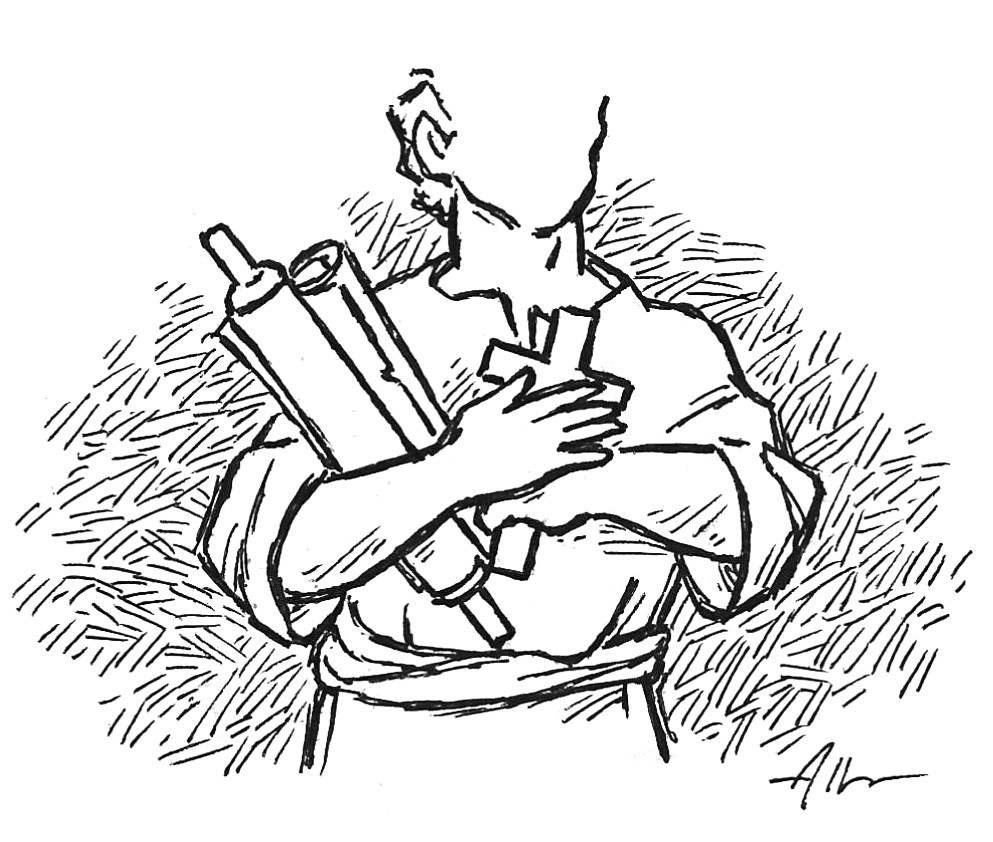
Almost all of us, at one time or another, have been entrusted with a duty or responsibility of some significance—one in which others depended on us to fulfill faithfully.
Sometimes, the significance and importance of that particular duty may be greater than we—at first—realized; and it’s only later on that the greatness of that responsibility sinks into our understanding. When that happens, we find ourselves wishing later on that we had really understood how important that duty was when it had first been given to us. We feel that, if we only had known at the beginning what it was that we were getting into—if we had only understood how great a thing it was that had been entrusted to our care—we might have taken that duty more seriously, and might have fulfilled our responsibility more diligently.
There are other times, however, when the significance and importance of a particular duty are made clear to us at the very beginning. And when that happens, we may find ourselves overwhelmed by the thing entrusted to us. We see that what’s being asked of us is more than we felt ourselves up to—and that the responsibility for it is greater than we wish to bear. At such times, we find ourselves calling out to God for His help—asking Him to guide us, and to empower us, and to make us sufficient for the task.
And this makes me wonder how Pastor Timothy felt about the responsibility that had been entrusted to him. He had been charged with the pastoral care of the church in the city of Ephesus that had begun to grow under the missionary ministry of the apostle Paul. It was a church that had required a great deal of labor from Paul, and for which he had a great deal of love and concern. He once referred to it as “the church of God which He purchased with His own blood” (Acts 20:28). And Paul considered Timothy to be the kind of man to whom he could entrust the responsibility of caring for and shepherding that precious church. And since we’ve been studying this letter together, we ourselves are still being impacted by that responsibility entrusted to Timothy even today.
As Paul told Timothy at the beginning of the letter —in 1 Timothy 1:3-5;
As I urged you when I went into Macedonia—remain in Ephesus that you may charge some that they teach no other doctrine, nor give heed to fables and endless genealogies, which cause disputes rather than godly edification which is in faith (1 Timothy 1:3-4).
He wanted Timothy to stay in Ephesus and protect the ministry of the gospel of Jesus Christ that Paul had first brought to the believers there. He wanted Timothy to make sure that no one taught anything else but the life-changing message of who Jesus is and what He has done to save us. What an important duty this was! He told him in verses 18-19;
This charge I commit to you, son Timothy, according to the prophecies previously made concerning you, that by them you may wage the good warfare, having faith and a good conscience, which some having rejected, concerning the faith have suffered shipwreck … (vv. 18-19).
He warned that some, having fallen away from a wholehearted devotion to the gospel of Jesus Christ, had suffered terrible spiritual harm and had brought destruction upon their own faith and upon the faith of others within that precious Ephesian church family. Paul didn’t want that to happen to Timothy and to his ministry. He told him in 4:6,
If you instruct the brethren in these things, you will be a good minister of Jesus Christ, nourished in the words of faith and of the good doctrine which you have carefully followed (4:6).
And so, he warned him in verse 16,
Take heed to yourself and to the doctrine. Continue in them, for in doing this you will save both yourself and those who hear you (v. 16).
What an awesome responsibility the ministry of the gospel of Jesus Christ is! The eternal destinies of precious souls depend upon it being fulfilled with the utmost seriousness and devotion. And I wonder: Did Timothy grasp the greatness of that responsibility from the very start? Or did the greatness of the responsibility grow in his understanding as he went along? I suspect that it was a combination of the two. I suspect that he understood something of the greatness of the responsibility that had been placed upon him from the beginning; but that Paul felt compelled to write this letter to him in order to strengthen that sense of responsibility and to exhort him to even more seriousness and devotion in the fulfilling of it.
And that, dear brothers and sisters, makes me turn the question around to us as a church family. The responsibility of protecting and proclaiming the message of the gospel has been passed on—to some degree—to this church family. As I have sought to repeatedly remind you, Paul calls the church at large “the church of the living God, the pillar and ground of the truth” (3:15). That’s its role in this world. And God has given pastors and elders to serve local church families, to take the lead in that responsibility, and to protect and proclaim that precious gospel faithfully.
Do we all—in this church family—take that great responsibility as seriously as we should? Do we see it as a sacred charge from God that’s worthy of our all? Are we growing together in a sense of how awesome a responsibility it truly is? Do we realize that future generations may be impacted by how we diligently protect and defend the gospel today?
It seems to me that, in this morning’s passage, the apostle Paul wanted very much to advance that sense of things in Timothy. He had been writing to urge Timothy, as the pastor, to take particular care of his own spiritual life—to flee from the things that he needed to flee from, and to pursue the things he needed to pursue, and to fight for and lay hold of the spiritual inheritance for which the Lord Jesus had laid hold of him. And in 1 Timothy 6:13-16—in stunningly strong terms—he told Pastor Timothy this:
I urge you in the sight of God who gives life to all things, and before Christ Jesus who witnessed the good confession before Pontius Pilate, that you keep this commandment without spot, blameless until our Lord Jesus Christ’s appearing, which He will manifest in His own time, He who is the blessed and only Potentate, the King of kings and Lord of lords, who alone has immortality, dwelling in unapproachable light, whom no man has seen or can see, to whom be honor and everlasting power. Amen (6:13-16).
If Timothy hadn’t grasped the seriousness of his responsibility before reading those words, he certainly must have begun to do so afterward. And I suggest that we will, too, if we take those words to heart. They’re words that were primarily meant for the role of a pastor of a church. But since the role of the pastor is to teach God’s people what is expected of them, and to take the lead in setting an example for them, then these words are also meant for all of us as a church family—and for each individual believer within it.
These words show us that the ministry of the gospel is a very serious and sacred charge that requires confidence, faithfulness, and a profound sense of authority from God from those who fulfill it. And may God use these words to increase in us that sense of the solemnness and seriousness of our responsibility as the pillar and ground of the truth in this world!
* * * * * * * * * *
Look with me at how Paul began that exhortation to Timothy. He said, “I urge you …” In the original language of Paul’s letter, that’s a word that described something stronger than a mere request for something to be done. It described an appeal that was very solemn and serious. It was used elsewhere in the Bible to describe a strict command that was expected to be obeyed. It’s the same word, in the form of a verb, that was used in 1 Timothy 1:18 for a “charge” that was committed to Timothy—an entrustment of a responsibility that was to be taken seriously and kept diligently.
We could translate Paul’s words in this passage as saying, “I solemnly entreat you, Timothy; I strictly and earnestly charge you to keep the command I gave you.” And what command was that? It was the command found at the very beginning of the letter—and that was repeated, in one form or another, throughout the whole course of the letter. It was that he stayed put and protected the integrity of the message of the gospel of Jesus Christ, to teach the people of God to live according to the gospel in a faithful and obedient way, and to prevent anyone from coming along and teaching something different than the gospel as it was passed down to us from the apostles and preserved for us in the Scriptures. That’s what a pastor must do; and that’s also what a church must do.
Now; that’s a hard command to obey in our day and age. It was also a hard command to obey at the time Paul gave it to Timothy. It will always be a hard command to obey in a fallen world such as ours. To protect, and proclaim, and faithfully live out the message of the gospel of Jesus Christ is to be devoted to a message that this world hates. To tell people that they are sinners who need to be saved, but that God has sent His own Son to take the guilt of our sins upon Himself and pay the death penalty on our behalf on the cross, and that if we will turn from our sins and trust in Him, we will be saved, is to proclaim a message that is deeply insulting to the pride and self-sufficiency of fallen humanity. The apostle Paul said elsewhere that it’s a message that’s a stumbling block to self-righteous religious people of this world, and foolishness to people who consider themselves wise.
But it’s a command that must be kept; because there is no other message that saves people’s souls than that very message of the gospel. It is, as Paul said elsewhere, the power of God unto salvation for everyone who believes. And so, as Paul went on to show in this passage, it must be preached with confidence, faithfulness, and a powerful sense of divine authority.
So then; look again at Paul’s words and see what he told Timothy about …
1. THE REASON FOR MINISTRY CONFIDENCE.
Because of the seriousness of this charge, we need confidence in the fulfillment of it. Timothy—who himself seemed somewhat timid by nature—needed confidence in the task. And so, in verse 13, Paul told him, “ I urge you in the sight of God who gives life to all things, and before Christ Jesus who witnessed the good confession before Pontius Pilate …” This isn’t just meant to give force to Paul’s command to preach the gospel. It’s meant to also give Timothy the much-needed confidence in the God who stands behind the message of the gospel.
First, notice that Paul urged Timothy to keep this command “in the sight of God who gives life to all things …” This is speaking of God the Father, who is the source of all life—not only of physical life but also of eternal life. It affirms God’s absolute self-sufficiency; because as Paul once said in Acts 17:15, God is the Creator of all, and is not “worshiped with men’s hands, as though He needed anything, since He gives to all life, breath, and all things”. But Paul’s words mean much more than that alone. Paul was telling Timothy that he can obey the command to proclaim the gospel in a hostile world, because the God he serves is the life-giving God. Even if it were to cost Timothy his life, he could be confident that God will give that life back to him. As the Lord Jesus Himself once told the church of Smyrna in Revelation 2:10;
Do not fear any of those things which you are about to suffer. Indeed, the devil is about to throw some of you into prison, that you may be tested, and you will have tribulation ten days. Be faithful until death, and I will give you the crown of life (Revelation 2:10).
And then, notice that Paul urged Timothy to keep this command “before Christ Jesus who witnessed the good confession before Pontius Pilate …” Do you remember how Jesus stood before Governor Pilate and remained silent while others were accusing Him? He only spoke when Pilate asked Him if He was truly the King of the Jews; and that was when He testified that His kingdom was not of this world; but that He indeed was a king; saying,
“For this cause I was born, and for this cause I have come into the world, that I should bear witness to the truth. Everyone who is of the truth hears My voice” (John 18:37).
He said all this just before giving His life for us on the cross. And then, three days later, God the Father—who gives life to all things—raised Him to life again. He is alive forevermore; and He serves as the great example of the confidence we can have as we faithfully declare His gospel and live for Him in this hostile world. As it says in 1 Peter 2:21-24;
For to this you were called, because Christ also suffered for us, leaving us an example, that you should follow His steps:
“Who committed no sin,
Nor was deceit found in His mouth”;who, when He was reviled, did not revile in return; when He suffered, He did not threaten, but committed Himself to Him who judges righteously; who Himself bore our sins in His own body on the tree, that we, having died to sins, might live for righteousness—by whose stripes you were healed (1 Peter 2:21-24).
So; Paul urged Timothy to be faithful to the ministry of the gospel with confidence—no matter what the cost—knowing that the God he served is the giver of life, and that the Lord Jesus he proclaimed is the example of trust in the God who gave His life back to Him. We should have this kind of confidence, too.
Then, look further at Paul’s words and see what he said about …
2. THE PATTERN OF MINISTRY FAITHFULNESS.
Paul went on, in verses 14-15, to urge Timothy “that you keep this commandment without spot, blameless until our Lord Jesus Christ’s appearing, which He will manifest in His own time …” This is meant to remind Timothy of the kind of faithfulness he was to exhibit in his gospel ministry.
First, he told Timothy to “keep this commandment without spot …” To be “without spot” means to be kept from being stained by the sinful influences of this fallen world. Pastor James used this same word in James 1:27 when he wrote,
Pure and undefiled religion before God and the Father is this: to visit orphans and widows in their trouble, and to keep oneself unspotted from the world (James 1:27).
And so, the idea here is that Timothy—as a minister of the gospel—was to make sure that he fulfilled his ministry without harming his usefulness to God through contamination from the ungodly influences around him. This didn’t mean that he must be perfect—since none of us can be. But what it meant was that, in order to be the kind of spokesman in this world for the gospel that God wanted him to be, he needed to be a distinctively holy man who kept himself from the defilement of this world. He must be a man above reproach. He must keep this command “without spot”. And dear brothers and sisters; in my ministry as pastor, and in our ministry together as a church, we must also keep ourselves ‘without spot’ as fit instruments for the Master’s use. The people of this world must be able to hear the message of the gospel of salvation from us without finding that we’re characterized by the very sins they themselves need to be saved from.
And then, notice another way that Timothy was to show himself faithful in the gospel ministry. Paul went on to say that he was to keep the commandment “blameless until our Lord Jesus Christ’s appearing, which He will manifest in His own time …” He was to continue in his ministry faithfully; knowing that one day—at the right time—just as He promised—the Lord Jesus will return. The awareness of the fact that our Lord and Master is coming one day should be a motivation for faithfulness to every preacher of the gospel and to every gospel-preaching church.
When I think of this, I remember what the apostle Peter once wrote to a group of pastors. In 1 Peter 5:1-3, he wrote;
The elders who are among you I exhort, I who am a fellow elder and a witness of the sufferings of Christ, and also a partaker of the glory that will be revealed: Shepherd the flock of God which is among you, serving as overseers, not by compulsion but willingly, not for dishonest gain but eagerly; nor as being lords over those entrusted to you, but being examples to the flock … (1 Peter 5:1-3).
And then, he told them this:
… and when the Chief Shepherd appears, you will receive the crown of glory that does not fade away (v. 4).
Paul was urging Timothy to keep faithful in his ministry—always looking toward the manifestation of Jesus’ appearing … which will happen in God the Father’s good time. Should the Lord suddenly come, Timothy wouldn’t want to be found unfaithful to the command that had been given to him. And because Timothy didn’t live to see the return of the Lord in his time, and since we still live in anticipation of that promised coming, I take it that we need to keep on being faithful to this command as well. Our Lord may come at any time. And when He does, may He find us preserving and proclaiming His gospel to the world!
So; Paul gave Timothy reasons for confidence in the keeping of the command to protect and preserve the gospel; and he also gave him a pattern for faithfulness to follow in that ministry. And now, finally, look at Paul’s words and see what he said about …
3. THE SOURCE OF MINISTRY AUTHORITY.
Timothy was under the greatest possible authority in proclaiming the message of the gospel. In verses 15-16, the apostle Paul told him to keep this command until the manifestation of Jesus’ coming at the time appointed by the Father; that is, “He who is the blessed and only Potentate, the King of kings and Lord of lords, who alone has immortality, dwelling in unapproachable light, whom no man has seen or can see, to whom be honor and everlasting power. Amen”. What authority it is that stands behind the gospel message and that commands it to be proclaimed to the world!
These words are speaking of God the Father of our Lord Jesus—the One who gave His own Son to be the Savior of mankind. Because these words highlight the majesty of God the Father, many Bible scholars believe that Paul was quoting from a doxology that was commonly used in worship in the ancient church. But whether these words were sung in the ancient church, or Paul was moved to declare them from the outburst of his own heart, they clearly show what authority it is that stands behind the command to proclaim the gospel to the world.
First, we’re told that God the Father is “the blessed and only Potentate”. That means that He is the absolute Sovereign over all; and that He causes whatever He wishes to happen. He is called “blessed,” which can also be translated as “happy.” And indeed, He is gloriously happy in His sovereignty, because He does whatever He wills, always wills only what is good and holy, and always sees His will fully accomplished. And He is declared to be the “only” Potentate; which means that He doesn’t need to consult a committee or give an account to anyone for what He chooses to do. He has willed that the gospel be proclaimed—and He has so willed it as “the blessed and only Potentate”.
Then, we’re told that God is “King of kings and Lord of lords”. Those words may sound familiar. They sound very much like the way that the Lord Jesus will be designated to the world on the day of His return in Revelation 19. But the wording in the original language is different here than in Revelation 19. These words speak of God the Father who is—as it can literally be translated—’King of those who are ruling and Lord of those who are lording.’ All power and authority is in His hand and at His command; and He rules sovereignly even over those to whom He gives power and authority in this world. This means that even if the kings and presidents and emperors and dictators of this world were to gather together and forbid the church from proclaiming the message of the gospel, it wouldn’t matter. God still rules, and the church is under higher orders. We are commanded to preach by Him who is the absolute Ruler over all other authorities.
Then, we’re told that God is the one “who alone has immortality”. We might read that and think to ourselves, “But wait … aren’t all who believe on Jesus also destined to live forever? How can it be said that God ‘alone’ has immortality?” Well; actually the word itself means that God is the only one who can never experience death. It actually says that He is the only one alone who cannot die. The Father has allowed His own beloved Son to be born into the human family and experience death for all of us; but the Father Himself will never experience it. And since this quality belongs to Him alone from eternity past to eternity future, He alone is able to give eternal life to whoever believes on His Son, or to give eternal existence in the lake of fire to whoever rejects His Son. He has full authority over eternal life and eternal death; and He is the one who has ordained that the message of eternal life through His Son be proclaimed to the world. Who can tell Him ‘No’?
We’re also told that God is the one “dwelling in unapproachable light”. This speaks of His unspeakable holiness. The Bible tells us in 1 John 1:5 that “God is light and in Him is no darkness at all”. No one could ever approach Him and demand an accounting from Him, and no one could ever question the righteousness or justness of His actions; because He dwells in unapproachable holiness and majesty. The command to proclaim the gospel in this world comes from Him who dwells in unapproachable light. What a picture this is of His divine authority!
Then, we’re told that God is He “whom no man has seen or can see”. This speaks of the mysterious superiority of His being. When Paul spoke of the fact that he—formerly a persecutor of the church and the chief of sinners—was now called to proclaim the message of the gospel, he declared in 1 Timothy 1:17;
Now to the King eternal, immortal, invisible, to God who alone is wise, be honor and glory forever and ever. Amen (1 Timothy 1:17).
We’re told in John 1:18;
No one has seen God at any time. The only begotten Son, who is in the bosom of the Father, He has declared Him (John 1:18).
If He is so much greater than human eyes can see or that human minds can grasp, who then can question His authority to command the gospel of His grace to be proclaimed to the world? Who can scrutinize Him or hold Him accountable? Who can even understand His ways? To whom then must He answer for His actions?
After all this, Paul exclaims, “to whom be honor and everlasting power. Amen.” God alone has power and authority to order the gospel of His Son to be proclaimed throughout the whole world; and all who will be saved by believing that gospel will give Him the glory forever. Amen indeed!
* * * * * * * * * *
There may be tasks that we are given for which we don’t immediately recognize the significance and importance. But as the pastor of this church, this passage helps me appreciate the awesome responsibility of protecting, proclaiming, and practicing the life-changing gospel of Jesus Christ. And I hope it helps you to appreciate it, too, dear church family. As our Lord Himself has declared in His ‘great commission’ to us:
“All authority has been given to Me in heaven and on earth. Go therefore and make disciples of all the nations, baptizing them in the name of the Father and of the Son and of the Holy Spirit, teaching them to observe all things that I have commanded you; and lo, I am with you always, even to the end of the age.” Amen (Matthew 28:18-20).
This is a sacred charge in which we can have all confidence, unto which we should apply all faithfulness, and for which we have all authority. By God’s grace, and for the sake of the eternal destiny of the souls of people around us, let’s take it seriously as it deserves to be taken!